Oct 14, 2026Buying Guides
Ball-End vs Straight Hex Keys: Which Belongs in Your Range
Ball ends reach fasteners at an angle; straight shafts carry more torque. How the trade-off works in S2 steel, and how the KK-504 ball-end set is positioned for a buyer's range.
One tool family, two working geometries
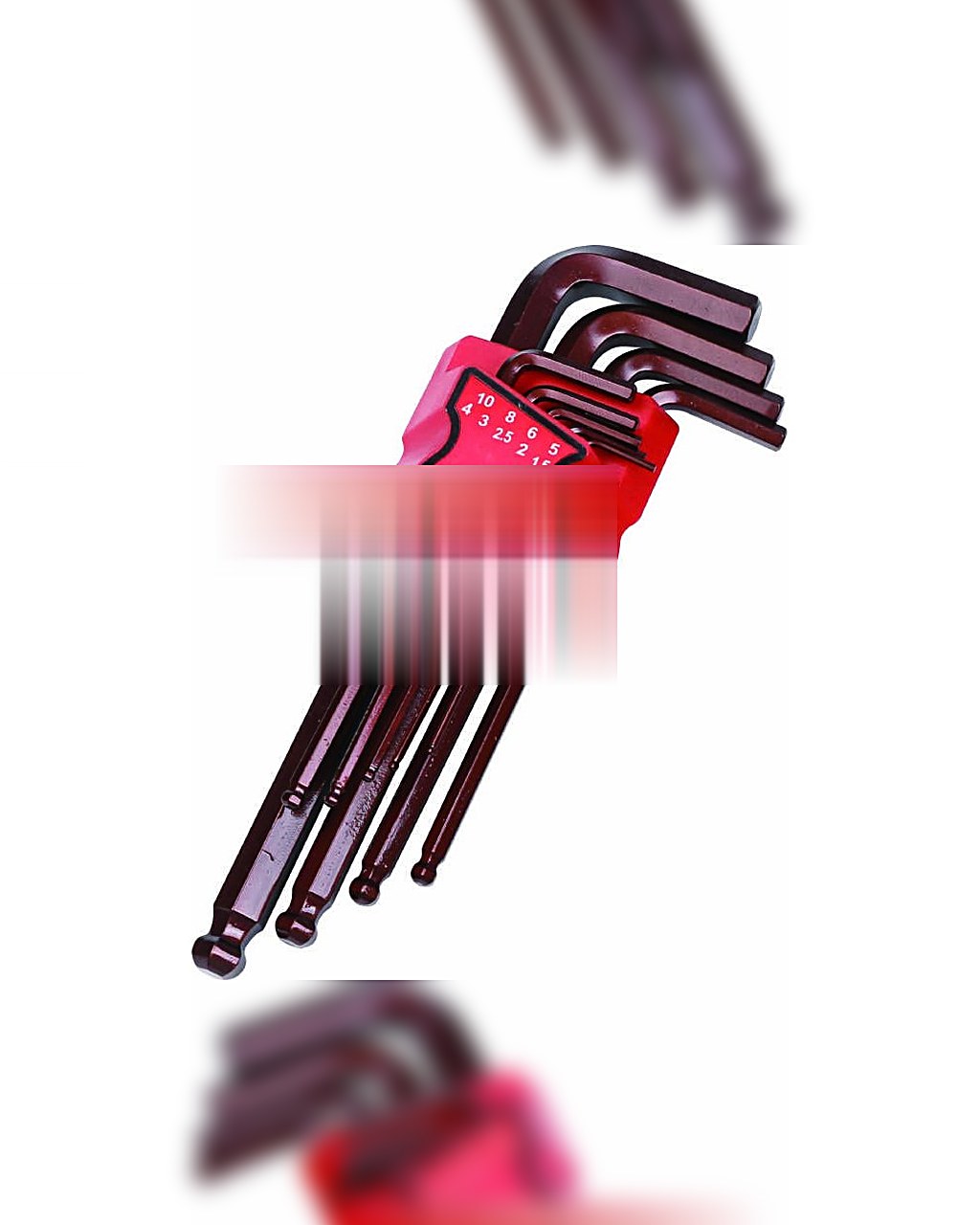
Every hex key is a hexagon shaft that turns a socket-head fastener, and the family splits at the tip. A straight key has a plain hexagon on both ends - full contact, full torque. A ball-end key rounds one tip into a hemisphere with the hexagon cut into it, so the key can engage the fastener from an angle instead of only dead square. That single geometry difference decides which tool belongs on which shelf and in which job.
What the ball end buys you
The ball end lets the wrench work at an angle to the fastener axis - typically around 20 to 25 degrees depending on size and manufacturer - which is what makes recessed and awkward-position bolts serviceable at all. In assembly and maintenance work where access beats leverage, ball-end keys are the default. The cost side: the ball contacts fewer surfaces, so maximum torque is lower than a straight tip, and forcing a ball end past its torque comfort risks rounding the tip or the fastener. Stocked correctly, ball ends are for reach and speed, not final tightening.
What the straight shaft does better
A straight hexagon fills the socket completely. More contact area means more torque before slip, and a straight tip tolerates the cheater-bar instinct that rounds ball ends. Fine-machinery and bicycle trades often run straight keys for exactly this reason. In the catalog, the hex line lists the KK-504 ball-end set and a long-shaft variant, in CR-V and S2 alloy steel, heat-treated for torque delivery - the steel grade sets the hardness, while the tip geometry sets the working envelope.
How the KK-504 set is positioned
The KK-504 is an S2 ball-end set in a holder wallet - S2 alloy steel for the shafts, ball tips for angled access, one holder so the sizes stay together in a technician's kit. S2's claim in this family is straightforward: it is the higher-hardness steel conventionally used where tip wear matters, and it is the same steel logic the catalog applies across its screwdriver and hex lines. For a buyer assembling a range, the set answers the service-and-assembly side of hex work, while separate straight-tip tooling - from other suppliers or later catalog additions - answers the torque side.
Range decisions: asking the right questions
1) Who is the end user - assembly technicians value ball ends, torque-critical trades value straight tips. 2) Metric or imperial, and which sizes dominate the market's fasteners? 3) Set format: holder wallet for toolkits, bulk for repackaging. 4) Steel grade by price tier: CR-V for the value line, S2 where the range positions on durability. 5) What tip geometry does the competition stock in this market - retailers read the tip first.
Deciding the hex-key block of your range? Send the sizes, quantities and destination market through the contact page - the export team returns carton data and set options for the range.