Oct 28, 2026Buying Guides
How Many Pliers Fit in a 40ft Container?
A worked example with real carton data: how many combination pliers fit in 20GP, 40GP and 40HQ containers, and why weight stops you before volume does.
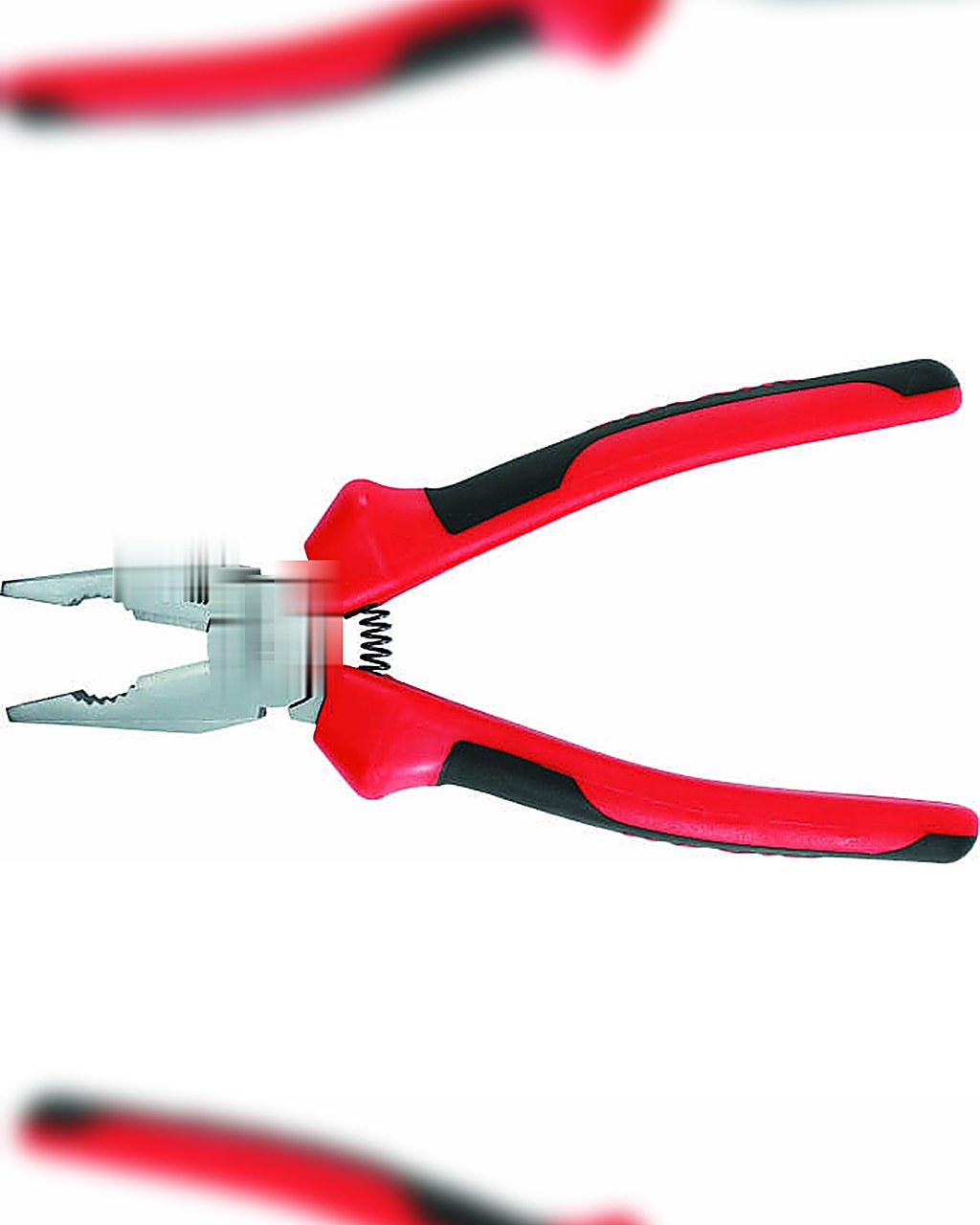
Wholesale buyers ask us this question every week, so here is the full answer with real carton data instead of rough guesses. A 40ft high-cube container holds about 53,000 pieces of 8-inch combination pliers from our catalog - not the 110,000+ pieces that a pure volume calculation suggests. The difference between those two numbers is the single most useful thing a first-time importer can understand, because weight, not volume, is what stops most steel tool orders.
All carton data below comes from the published catalog of Kingkong Auto Tools, a hand tools factory in Shunde, Foshan: every model on our site lists pieces per carton, cubic meters per carton, and gross weight per carton. You can re-run every calculation in this article yourself.
The Two Limits: Volume and Weight
A container has two ceilings, and you always hit the lower one first.
The volume ceiling is measured in CBM (cubic meters). A 20GP container offers about 28 CBM of practical loading space, a 40GP about 56 CBM, and a 40HQ about 68 CBM. These are practical planning figures - the theoretical ones are slightly larger. If you want extra safety margin for dunnage and irregular stacking, plan at 85-90% of them, as the worked examples below do.
The weight ceiling is the max payload, typically around 26,000 kg for these container types on standard road limits.
Here is the quick rule: divide payload by usable volume and you get a density threshold. For a 40HQ that is 26,000 kg ÷ 68 CBM ≈ 382 kg per CBM. If your cartons are denser than that, you will hit the weight limit with space still left over. Steel hand tools almost always are: our 8-inch combination plier packs at 821 kg per CBM (35.20 kg into 0.0429 m³).
What Fits: Three Pliers, Three Container Types
Using our catalog carton data, calculated at the lower of the two limits:
KK-101 combination plier, 6 inch - 90 pcs per carton, 0.0454 m³, 23.05 kg per carton (carton density 508 kg/CBM). 20GP: about 616 cartons, or 55,440 pieces (volume-limited). 40GP: about 1,128 cartons, or 101,520 pieces (weight-limited). 40HQ: also 1,128 cartons - the weight ceiling arrives in a 40GP, so upgrading to a high-cube adds no pliers. Buyers who compare container prices per CBM often miss this and pay for space they cannot fill.
KK-101 combination plier, 8 inch - 72 pcs per carton, 0.0429 m³, 35.20 kg per carton (density 821 kg/CBM). 20GP: about 652 cartons, or 46,944 pieces (volume-limited). 40GP and 40HQ: 738 cartons, or 53,136 pieces (weight-limited).
KK-121 multi-functional wire plier, 225 mm - 60 pcs per carton, 0.0400 m³, 25.10 kg per carton (density 628 kg/CBM). 20GP: 700 cartons, 42,000 pieces. 40GP and 40HQ: 1,035 cartons, 62,100 pieces (weight-limited).
KK-400 PVC pipe cutter, 37 mm - 72 pcs per carton, 0.0503 m³, 14.65 kg per carton (density 291 kg/CBM - lighter than the threshold). This one is volume-limited in every container: 20GP 556 cartons / 40,032 pieces, 40GP 1,113 cartons / 80,136 pieces, 40HQ 1,351 cartons / 97,272 pieces. Light tools are the exception where the high cube genuinely pays off.
Theoretical Versus Realistic Numbers
The figures above assume perfect loading. In practice, plan on 85-90% loading efficiency once you account for dunnage bags, air gaps from carton shape, and space to actually load the container. On the 8-inch plier example, that turns 738 cartons into roughly 630-660 cartons, or 45,000-47,500 pieces in a 40HQ.
Palletizing changes the math again. A palletized load protects the goods and speeds unloading, but pallets typically consume 12-18% of the container volume, and wooden pallets must carry ISPM-15 heat-treatment marks for most destination markets. Loose-loaded cartons maximize piece count; palletized cartons maximize what happens after the container doors open.
How to Run Your Own Math
Three steps, no tools needed. First, boxes by volume: usable CBM divided by carton m³. Second, boxes by weight: payload divided by gross carton kg. Take the smaller of the two - that is your real box count. Third, pieces: boxes multiplied by pieces per carton.
Worked example, KK-101 8-inch in a 40GP: 56 ÷ 0.0429 = 1,305 boxes by volume; 26,000 ÷ 35.2 = 738 boxes by weight; take 738; 738 × 72 = 53,136 pieces. Then apply your loading efficiency for the planning number.
One more detail worth checking before you book: some shipping lines and destination markets apply lower road weight limits than the container's maximum payload, especially in the US and parts of Europe. If your forwarder mentions a lower limit, the weight ceiling drops and the math changes.
What This Math Is For
We run this calculation for every inquiry - it is the standard first page of our quotations, next to the carton data for each model. If you have target quantities and a destination port, send us the list and we will return a carton-level loading plan showing exactly how many pieces of each model fit, which limit binds, and what a mixed load looks like.
Contact: info@kingkongnev.com or the quotation form on our contact page.